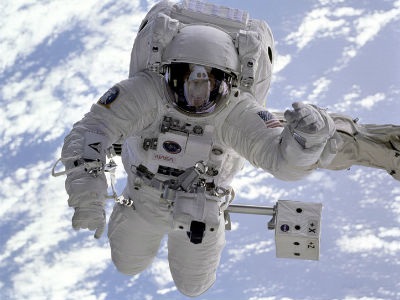
A new study recently presented at the annual meeting of the Radiological Society of North America (RSNA) has found astronauts on long-duration missions experience vision problems due to volume changes in their cerebrospinal fluid (CSF) around the brain and spinal cord.
According to researchers, over the past decade flight surgeons and scientists at NASA had noticed a pattern of visual impairment in astronauts who flew long-duration space missions, including blurry vision and structural changes such as flattening at the back of their eyeballs and inflammation of the head of their optic nerves.
Researchers from the University of Miami Miller School of Medicine looked to CSF has the potential cause and to test their thesis, reportedly conducted high-resolution orbit and brain MRI scans before and shortly after spaceflights for seven long-duration mission ISS astronauts and compared the results to those from short-duration mission space shuttle astronauts.
The results reportedly showed long-duration astronauts had significantly increased post-flight flattening of their eyeballs and increased optic nerve protrusion, compared to short-duration astronauts. And long-duration astronauts had significantly greater post-flight increases in both orbital and ventricular CSF volume.
Click here to read the full press release.
Source: Radiological Society of North America